Bengaluru's Coffee Culture: When Your Daily Brew Starts Brewing Health Problems
Bengaluru runs on coffee, but the city's doctors are seeing the downside - acidity, anxiety, palpitations, and sleepless nights. Before your next cappuccino, here's what you should know about your daily caffeine limit.

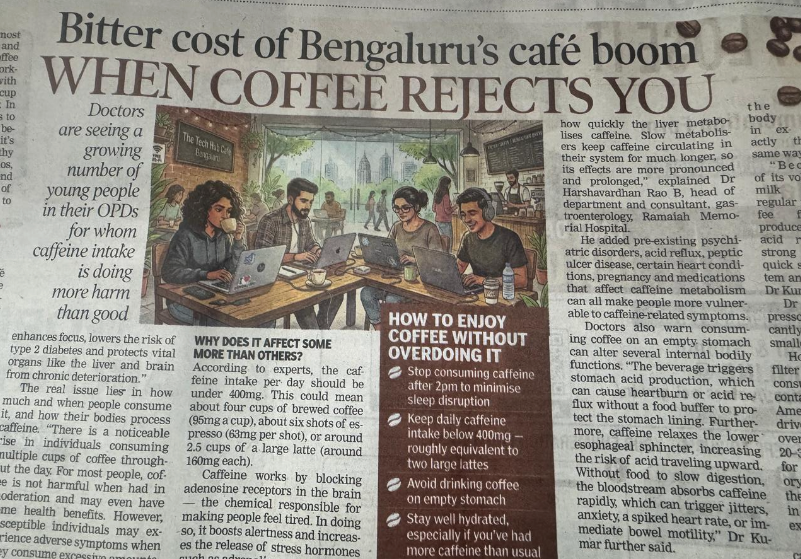
Today morning I grabbed a daily newspaper with my usual cup of coffee, and the irony wasn't lost on me, right there on the page was a story about how Bengaluru's coffee obsession is quietly sending people to the doctor.
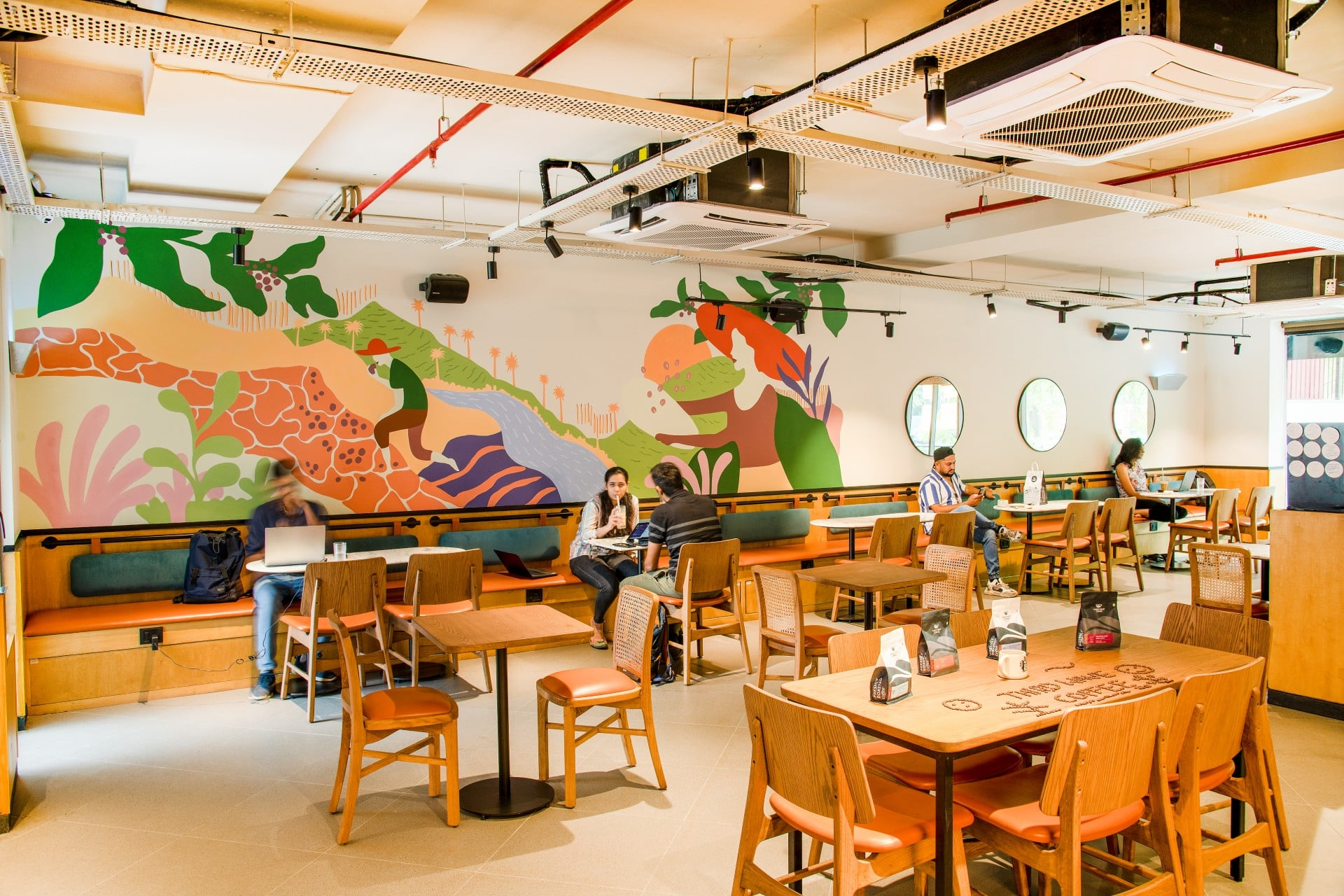
It made me pause mid-sip. Walk through any neighbourhood in Bengaluru today and you'll spot the same scene: a new café on the corner, laptops open on every table, and a queue of people waiting for their third cappuccino of the day. Coffee has quietly become more than a drink here, it's a workspace, a social ritual, and for many of us, a lifestyle.

But as I read on, it became clear that the city's doctors are starting to see the other side of that story.
What's showing up in the clinics
Physicians across Bengaluru report a steady rise in patients, many of them young IT and startup professionals in their 20s and 30s, coming in with complaints that trace back to one common thread: too much caffeine.
The pattern is familiar. Persistent acidity and acid reflux. Anxiety, tremors, and restless nights. Racing heartbeats, headaches, dizziness, and excessive sweating. Individually, these symptoms send people to different specialists. Put together, they often point to a daily coffee habit that has crept well past healthy limits.
How much is too much?
Most experts suggest keeping daily caffeine under about 400mg. That sounds like a lot until you do the math:
- A shot of espresso: roughly 60–65mg
- A cup of brewed coffee: around 95mg
- A large latte: about 160mg
So 400mg is roughly four cups of brewed coffee or two-and-a-half large lattes. If you're ordering a flat white at 10am, another at 2pm, and a cold brew to push through the evening plus an energy drink on gym days, you may be blowing past that ceiling without realising it.
Why coffee hits people differently
Ever wondered why your colleague can down a double espresso at 9pm and sleep like a baby, while one afternoon coffee leaves you wired at midnight?
A big part of the answer is genetics. Variations in a gene called CYP1A2 influence how quickly your liver breaks down caffeine. Fast metabolisers clear it quickly and feel fewer effects. Slow metabolisers keep caffeine circulating for hours longer, so the same cup hits harder and lasts longer.
Caffeine itself works by blocking adenosine, the brain chemical that makes you feel tired while nudging up stress hormones like adrenaline. That's the alertness we all love. But in higher doses, the same mechanism drives jitters, a spiked heart rate, disturbed sleep, and stomach trouble. Caffeine can also relax the valve at the top of the stomach and increase acid production, which is why heartburn is such a common complaint among heavy coffee drinkers, especially when the coffee lands on an empty stomach.
Filter coffee vs. Americano: does it matter?
Interestingly, the brewing method changes the picture. South Indian filter coffee slow, gravity-brewed and usually served with milk in small tumblers tends to deliver less caffeine per serving than an espresso-based Americano. Espresso extraction is fast and concentrated, and modern café servings are large.
And remember: coffee isn't the only source. Tea, green tea, matcha, energy drinks, and even some medications all add to your daily caffeine tally.
Enjoying coffee without overdoing it
The good news? Nobody is saying quit. Coffee in moderation has genuine benefits - better focus, antioxidants, and possible metabolic and cognitive upsides. The goal is simply to stay on the right side of the line:
- Set a caffeine curfew. Try to stop by early afternoon (around 2pm) so it doesn't wreck your sleep.
- Track your total. Keep daily intake under ~400mg, counting tea, energy drinks, and pre-workouts too.
- Don't drink it on an empty stomach. Food slows absorption and protects your stomach lining.
- Hydrate. Water matters even more on heavy-coffee days.
- Know your own tolerance. If one cup makes you anxious or sleepless, that's your body's answer, respect it.
- Watch for red flags. Chest pain, palpitations, fainting, or severe dizziness after caffeine deserve medical attention, not another latte.
The bottom line
Bengaluru's café culture isn't going anywhere and honestly, most of us wouldn't want it to. But the beverage that fuels the city's hustle works best as a tool, not a crutch. Enjoy the brew, know your limits, and let coffee stay what it should be: a small daily pleasure, not a slow-burning health problem.